Research Group Leaders:
Professor: Karsten Specht
Associate professor: Renate Grüner
Bergen fMRI Group
Department of Biological and Medical Psychology
Jonas Liesvei 91
N-5009 Bergen, Norway
The Bergen fMRI Group is an interdisciplinary research group at the University of Bergen and Haukeland University Hospital with interests in functional Magnetic Resonance Imaging (fMRI).
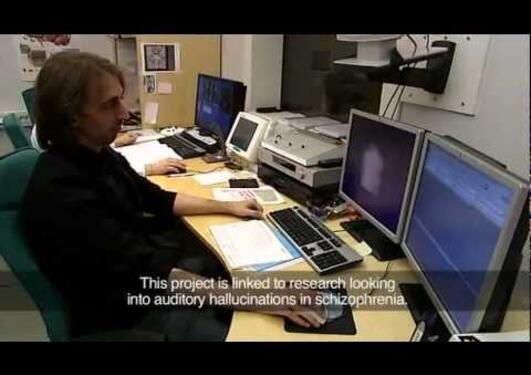
A particular focus for the fMRI Group is on the study of auditory perception, speech perception, music processing, neurological disorders, auditory hallucinations in schizophrenia, cognitive control, and functional and structural brain asymmetry. The research is also focused on brain activation studies related to a broad spectre of cognitive functions, including laterality, speech and language, working memory, attention, cognitive control and emotions, depression and aging.
To study the brain we are using a range of different tools: Morphometry, perfusion/diffusion imaging, diffusion tensor imaging, spectroscopy, EEG and neuroinformatics.
Bergen fMRI Group is the recipient of an European Research Council Advanced Grant through professor Kenneth Hugdahl in 2010 and 2016.
Subgroups:
- Bergen Group on Auditory Perception (BeRG-AP)
- ERC2
- Research Lab for Stimulation of the Brain (FLASH group)
- Re:State
- Bergen Dopamin Group (BDG)
- Emotion and Cognition Group (ECG)